


Carbon Build Up In Diesel Engine can occur when certain problems arise. The main causes of Carbon Build Up In Diesel Engine include using poor quality fuel, incomplete fuel combustion, frequent short trips, cold weather conditions, excessive engine idling, faulty injectors, issues with sensors and the ECU, problems with the PCV system, and infrequent oil changes. Understanding these factors can help you prevent Carbon Build Up In Diesel Engine and keep your diesel engine running smoothly.
Key Takeaways
- Use good diesel fuel to stop carbon buildup. Clean fuel burns better and helps your engine work well.
- Change your oil often, about every 5,000 to 7,500 miles. New oil lowers carbon and keeps your engine healthy.
- Do not let your engine idle too much or take short trips. If your engine stays cool, it does not burn fuel all the way. This makes more carbon build up.
- Take care of your engine by doing regular checks. Service your fuel injectors and look at sensors. This stops problems that make carbon collect.
- You can use fuel additives to clean your engine. These can break down old carbon and stop new carbon from forming.
Main Causes of Carbon Build Up in Diesel Engine

Poor Fuel Quality and Impurities
Carbon buildup can happen faster with poor fuel. Bad diesel fuel has more stuff in it that does not burn all the way. This leaves behind carbon inside your engine. Some diesel fuels have a lot of sulphur. This makes more soot and carbon.
To keep your engine safe, use good diesel fuel. A diesel fuel system cleaner helps get rid of bad stuff and stops carbon from building up.
Some things found in diesel fuel are:
- Sediments
- Water
- Rust
- Dust
- Microorganisms
These things can block filters and hurt fuel injectors. They also make your engine use more fuel. Water in the fuel can cause rust and let bacteria grow. This can break injectors and make more carbon. Additives that are not mixed well can also cause problems and carbon.
Incomplete Combustion Factors
If fuel does not burn all the way, it leaves carbon. This is called incomplete combustion. It happens if your engine does not get hot enough. It can also happen if the air and fuel mix is wrong.
Some reasons for incomplete combustion are:
- Worn-out fuel injectors
- Dirty air filters
- Poor-quality fuel
- Malfunctioning EGR system
If you drive slow or carry light loads, this can happen more. Injectors that are blocked or broken do not spray fuel right. This makes soot and carbon. If the EGR system does not work, it can make more carbon too.
Short Trips, Cold Weather, and Low Temperatures
Short drives and cold weather can make more carbon. If you only drive a short way, your engine does not get hot. This makes it hard for fuel to burn all the way. Then carbon builds up.
- Short trips use up oil much faster than highway driving.
- City driving can make oil go bad and mix with fuel.
- Cold weather keeps the engine from getting hot enough.
If you drive short trips or in cold, you may see more carbon. Parts like the EGR system can stop working right.
Excessive Idling
Letting your engine idle too long can make carbon. When the engine idles, it does not get hot enough. This means fuel does not burn all the way. More carbon and soot build up inside.
- Idling for a long time keeps the engine cool.
- Not enough heat means more carbon forms.
To stop carbon, do not let your diesel engine idle for too long.
Faulty Injectors and Sensors
Broken injectors can make a lot of carbon. If injectors are blocked or old, they do not spray fuel right. This makes fuel burn badly and leaves carbon. Inside the injector, deposits can make things worse.
Sensors that do not work can also cause carbon. If a sensor like the MAP sensor breaks, the engine gets the wrong mix of air and fuel. This means some fuel does not burn. You get more pollution and more carbon.
You might notice:
- Black smoke from the exhaust
- Rough idling
- Hard starting
- Engine misfires
ECU and PCV System Issues
The ECU controls many engine parts. If the ECU sends wrong signals, the engine can run too rich or too lean. This makes fuel burn badly and leaves carbon.
The PCV system helps clean the engine. If it breaks, tubes and valves can get blocked. This raises pressure and makes more carbon. Too much carbon hurts how the engine works.
Infrequent Oil Changes
Changing oil often helps stop carbon. If you wait too long, oil gets old and turns into carbon on engine parts.
- Most say to change diesel oil every 5,000 to 7,500 miles.
- If you tow, drive off-road, or it is very hot or cold, change oil at 5,000 miles.
Not changing oil enough can hurt how the engine works. It can mess up the air and fuel mix and damage the engine. Good fuel and a diesel fuel system cleaner can help stop carbon from building up.
Impact of Carbon Buildup on Engine Performance
Power Loss and Efficiency Drop
When carbon builds up inside your diesel engine, you might notice less power. The engine cannot get enough air because carbon blocks the airflow and fuel injection. You need to use more fuel to do the same job. This means your engine does not work as well and costs more to run.
Here is a table that shows how carbon buildup can hurt your diesel engine:
| Impact Type | Description |
|---|---|
| Reduced Engine Efficiency | Carbon buildup blocks air and fuel, so the engine loses power and works less well. |
| Engine Vibration and Rough Operation | Too much carbon can make the engine shake and run rough because the fuel does not burn right. |
| Erratic or Surging Performance | Carbon can make the engine act strange, with power going up and down. |
| Excessive Black Smoke from Exhaust | Black smoke means the fuel is not burning all the way, often because of clogged parts. |
| Increased Fuel Consumption | Bad burning uses more fuel, so you spend more money. |
Tip: Cleaning out carbon can help your engine get its power back and use less fuel.
Increased Emissions
Carbon buildup makes your diesel engine pollute more. When fuel does not burn all the way, black smoke comes out of the exhaust. This smoke means something is wrong with the engine. You might also smell something strong. More pollution is bad for the environment and can make your car fail tests.
- Carbon can change how much fuel and air mix together, so the engine burns fuel badly.
- Letting the engine idle too long can make more carbon.
- Try not to let your engine idle for a long time to keep pollution low.
Hard Starting and Rough Idling
If your diesel engine is hard to start, carbon might be the problem. Carbon in the combustion chamber and injectors makes it tough for fuel to burn. You might hear knocking or feel shaking when the engine is running. If the engine shakes or is hard to start, it could be because of carbon.
- Carbon can make fuel spread unevenly, which causes rough idling and hard starts.
- You might notice the engine misfires or shakes more than normal.
Long-Term Engine Damage
If you do not clean out carbon, it can cause big problems. Over time, carbon gets hard on parts like valves and pistons. This makes the parts wear out faster. Your engine could break if you ignore these signs. Breathing diesel exhaust for a long time can also hurt your health. Studies show it can cause lung and heart problems.
Note: Cleaning and taking care of your engine often can stop big problems and keep you healthy.
How to Remove and Prevent Carbon Buildup

Cleaning Carbon Buildup Methods
There are different ways to clean carbon from your diesel engine. Some ways are easy and cheap. Others cost more but work better. The table below shows how much each way costs and how well it works:
| Cleaning Method | DIY Cost | Professional Cost | Effectiveness |
|---|---|---|---|
| Fuel Additives | $10 – $30 | N/A | ⭐⭐⭐ |
| Engine Flush | $20 – $50 | N/A | ⭐⭐⭐ |
| Manual Cleaning | $50 – $100 | $200 – $500 | ⭐⭐⭐⭐ |
| Walnut Blasting | N/A | $300 – $600 | ⭐⭐⭐⭐⭐ |
| Hydrogen Cleaning | N/A | $100 – $400 | ⭐⭐⭐⭐ |
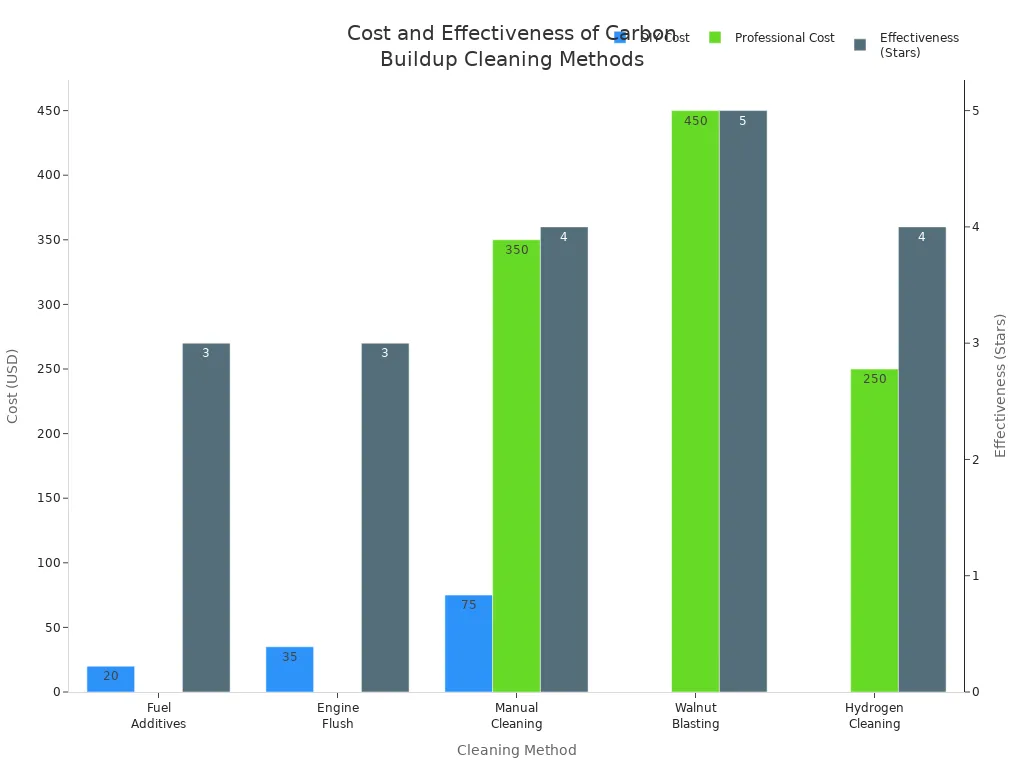
You can use fuel additives or an engine flush at home. These are simple ways to clean carbon. For a deeper clean, you need a professional. Manual cleaning or walnut blasting removes more carbon.
Using High-Quality Fuel and Additives
Always pick good diesel fuel for your engine. Good fuel helps your engine burn cleaner. It also helps the engine work better. Add a detergent additive to your diesel fuel often. This helps clean out deposits. It also keeps the egr system working right. Products like Dee-Zol can clean deposits. They help the diesel particulate filter last longer.
- Use premium diesel fuel.
- Add a fuel system cleaner to remove carbon.
- Pick additives that help the egr system stay clean.
Regular Maintenance and Oil Changes
Taking care of your engine is very important. Change your oil when the car maker says to. Service your fuel injectors and change spark plugs if needed. Use good oil to keep out dirt. This helps the egr system work better.
Tip: Doing regular maintenance stops carbon buildup and keeps your engine healthy.
- Change oil on time.
- Service injectors and egr system.
- Use good oil and fuel.
Proper Driving Habits
How you drive can help stop carbon buildup. Try not to take short trips. Do not let your engine idle for a long time. Drive on the highway sometimes. This lets the engine get hot enough. It helps the egr system and burns fuel better.
- Take fewer short trips.
- Do not idle too long.
- Drive longer sometimes to help remove carbon.
If you follow these steps, you can stop carbon buildup. Your diesel engine will work better and last longer.
You now know that using bad fuel, not burning fuel all the way, taking short drives, cold weather, and not changing oil can make carbon build up in diesel engines. Carbon deposits make your engine weaker, cause more pollution, and can break engine parts.
- Change your oil when you should
- Pick good fuel
- Do not let your engine idle for a long time
- Try to drive farther when you can
Look after your engine. Doing regular checkups keeps your diesel working well and helps you not spend a lot on repairs.
FAQ
What are the signs of carbon buildup in a diesel engine?
You may notice black smoke, rough idling, hard starting, or less power. The engine might shake or make knocking sounds. These signs mean you should check for carbon deposits soon.
How often should you clean carbon buildup?
You should check and clean carbon buildup every 20,000 to 30,000 miles. If you drive in tough conditions, do it more often. Regular cleaning keeps your engine healthy.
Can you prevent carbon buildup with additives?
Yes! You can use fuel additives to help keep your engine clean. Additives break down deposits and stop new carbon from forming. Always choose a high-quality product.
Does short city driving cause more carbon buildup?
Yes. Short trips do not let your engine get hot enough. This causes more carbon to form. Try to take longer drives sometimes to help burn off deposits.
Explore FAWDE Diesel and Gas Engines
FAWDE (Wuxi Diesel Engine Works), part of FAW Jiefang, has been engineering commercial diesel power for over six decades. Wuxi Winteam Technology is the exclusive overseas distributor of the full FAWDE catalog.
Browse our complete engine catalog: Euro 1, Euro 2, Euro 3, Euro 4, and Euro 5 diesel engines. Specialty applications include generator set engines, water pump engines, and natural gas engines. For pricing and OEM enquiries, please contact us directly.